Abstract Art
Artistic Movements, Periods and Styles in 5 Points
We could make this publication thanks to small donations. How is 3 minutos de arte supported?
Abstract Art
- In art, “figuration” is when real and recognizable people and objects are represented. Abstraction moves away from figuration. Total, complete, pure abstraction is when we find shapes and colors without recognizing figures or objects of the real world.
- From the Renaissance to the end of the 19th century, Western art was subject to the logic of perspective and aimed to imitate nature as closely as possible. With the advance of photography, this necessity no longer made sense to many. Then they began to simplify the representation in order to make it more expressive, and so abstraction began on its way.
- As early as the second half of the 19th century, the art of non-European cultures became accessible and showed artists new ways of describing visual experiences. This was also crucial for abstraction. (For example, in the first painting of Cubism, Les Demoiselles d’Avignon, Picasso was influenced not only by Cézane but also by abstraction in the art of African masks.)
- Abstract art uses a visual language of form, color, and line (essential, pure elements) to create a composition that can exist independently of visual references to the real world. What is more: abstract works, strictly speaking, cannot refer to anything outside of the work itself.
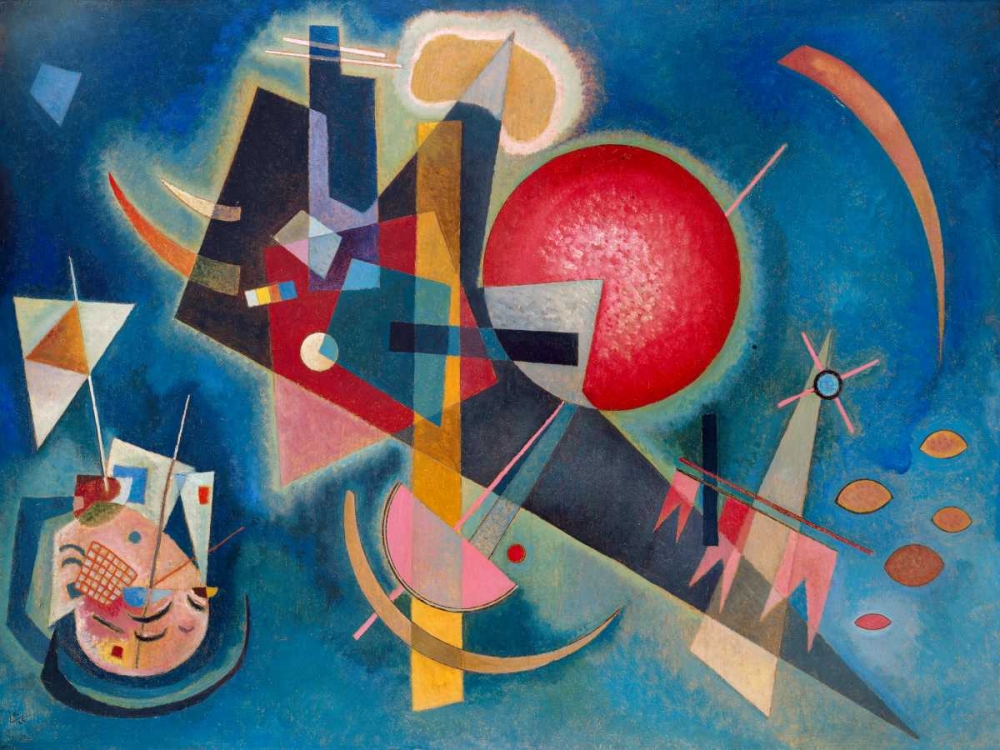
- The degree of abstraction of a work can be light, partial, or complete. Sometimes we recognize an object that has been simplified to its essential form, and sometimes we are confronted with a “pure” abstraction, such as that in the painting we have chosen.
Representative Artists: Kandinsky, Delaunay, Marc, Mondrian, Malévich, Klee.
Image: In Blue (1925) Kandinsky
Recommended links:
“A form without content is not a hand but an empty glove, full of air.”
Joan Miró and the Abstraction.
Timeline: Moments of Kandinsky.
The Suprematist Compositions of Malévich.
Fundamental Painters of Abstract Expressionism.
You can also find more material using the search engine.


0 Comments