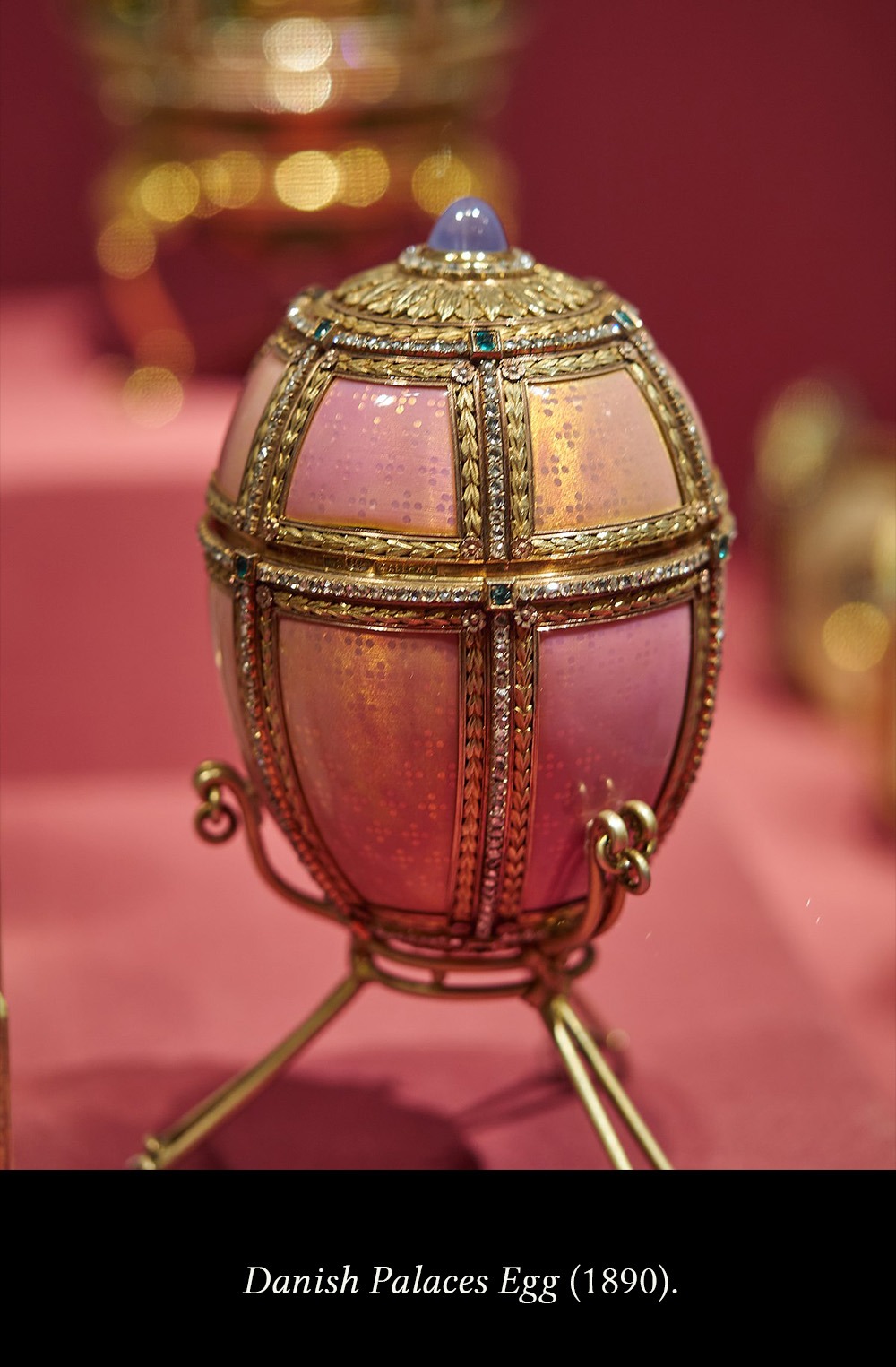
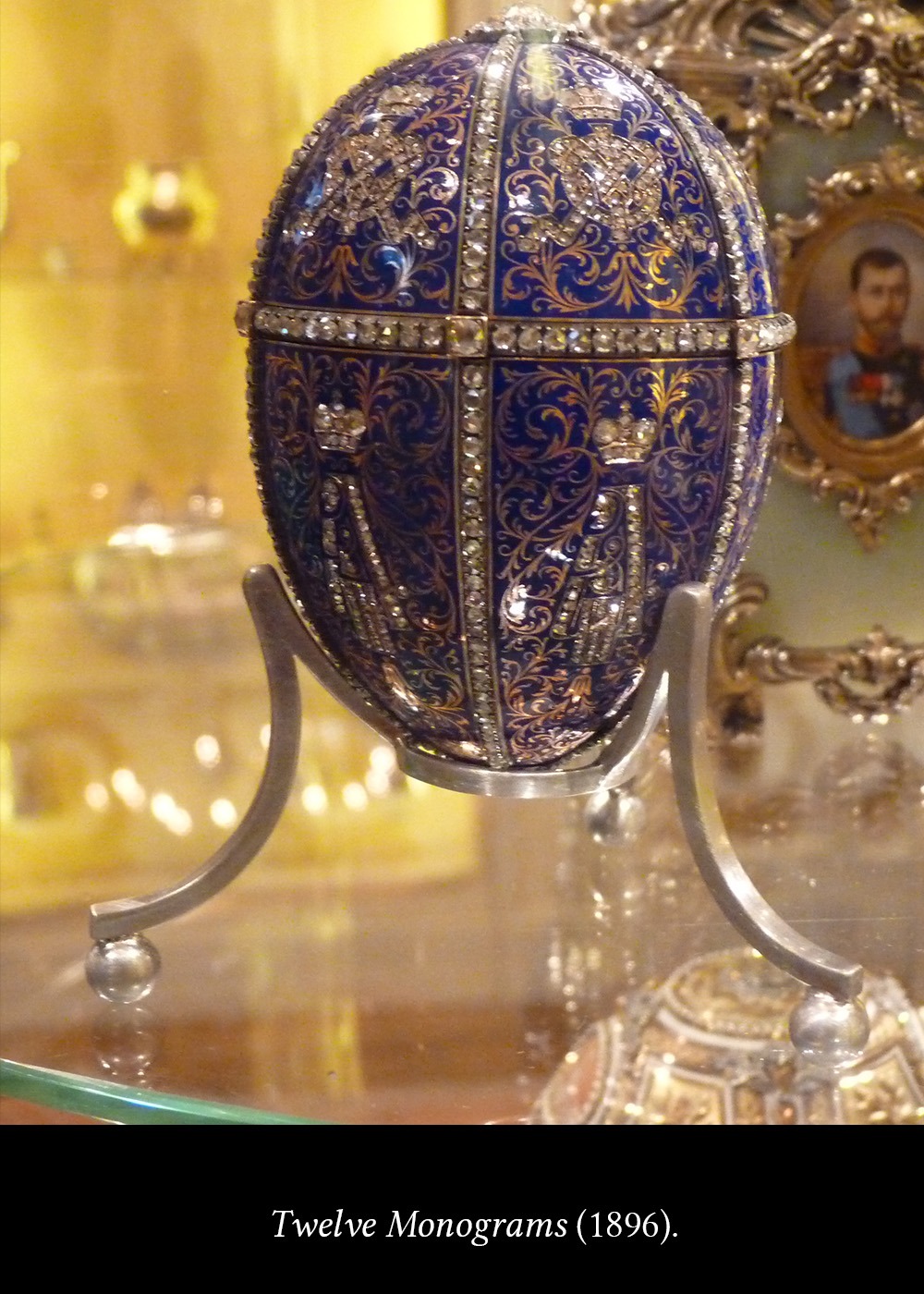
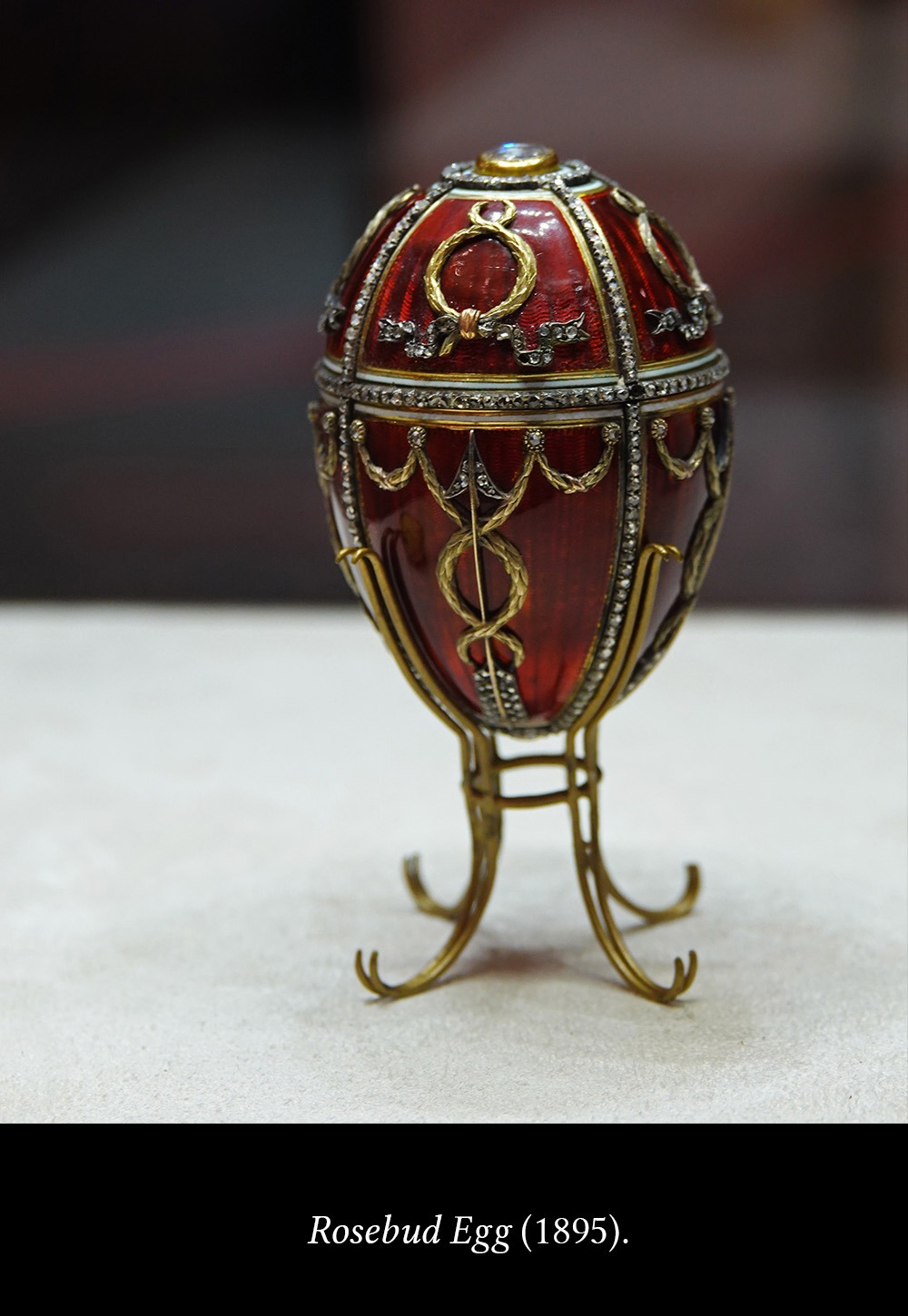
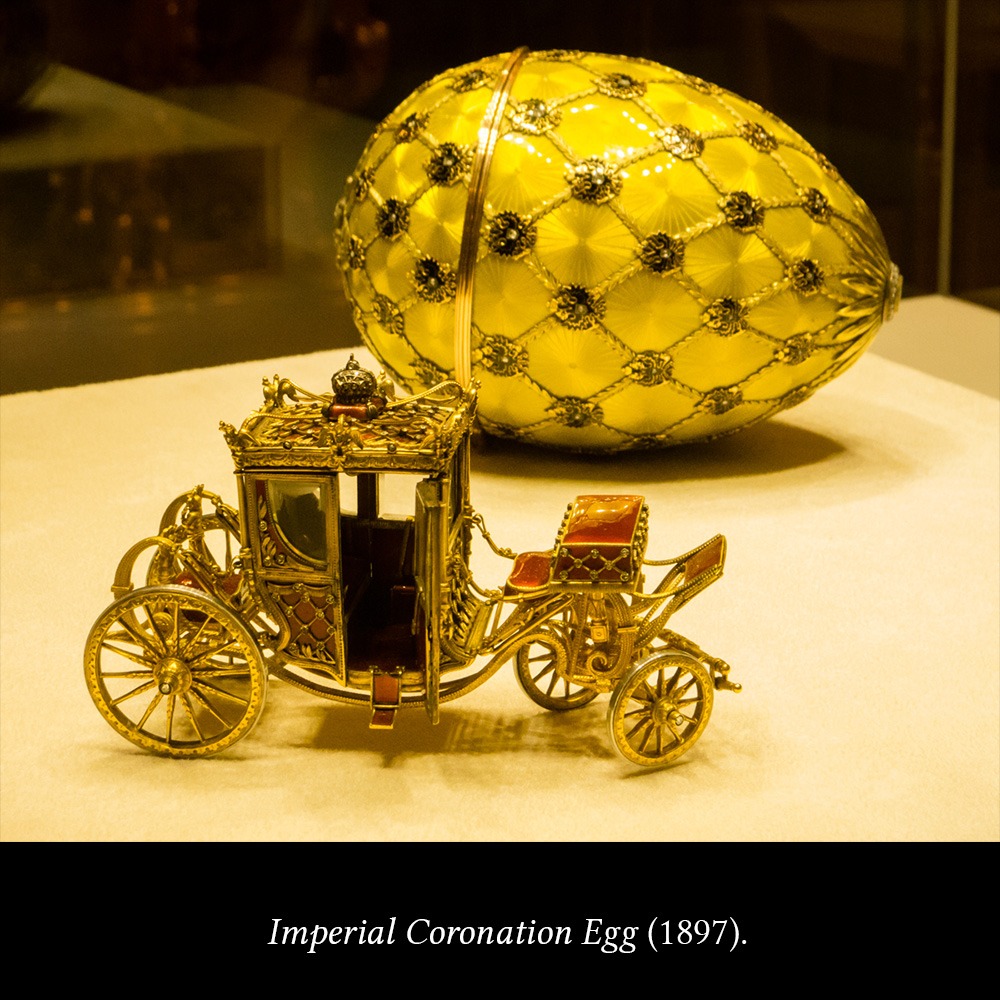
Fabergé’s Eggs. Easter Eggs, Jewelry, Art
Six Images. One Concept
We could make this publication thanks to small donations. How is 3 minutos de arte supported?
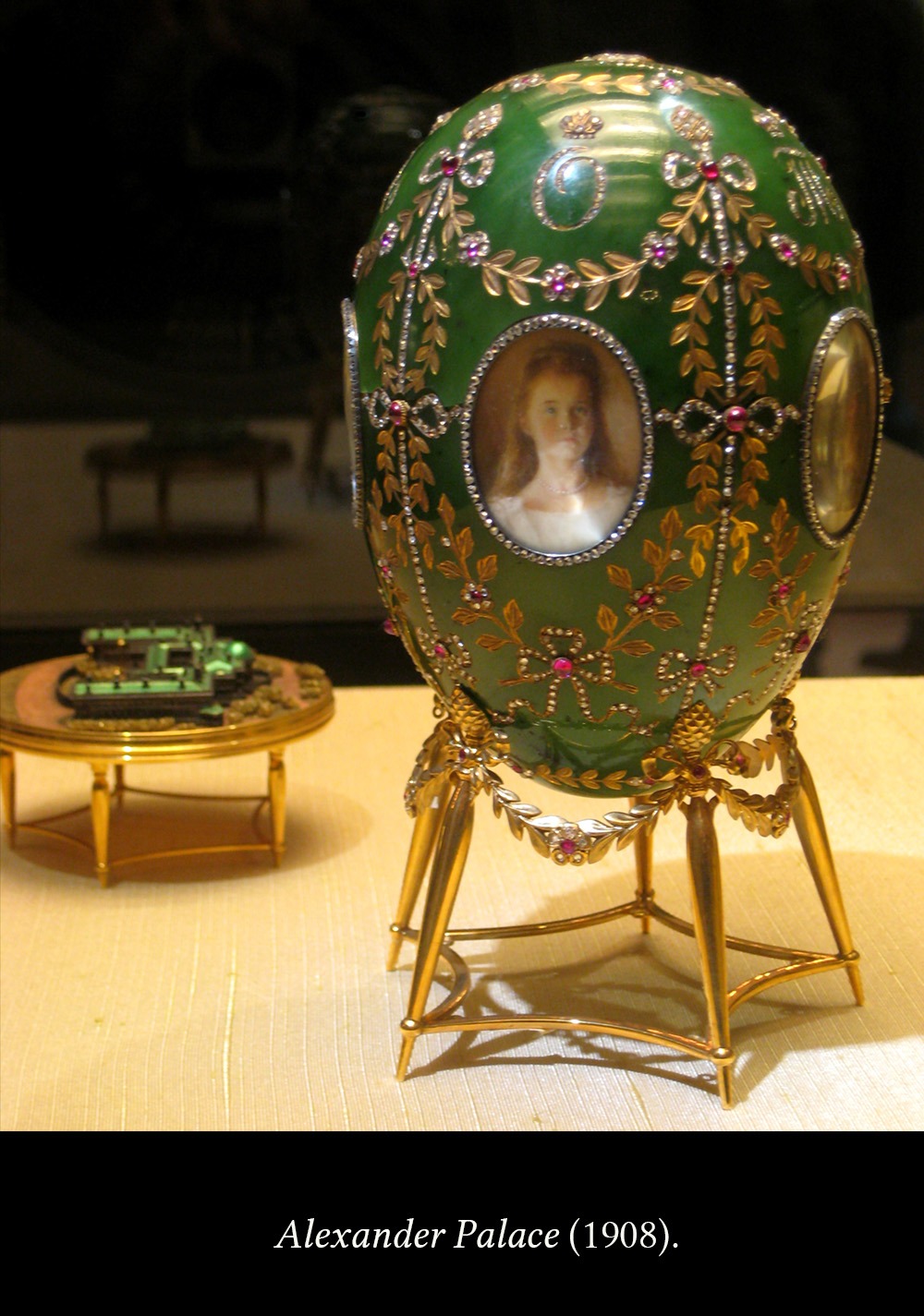
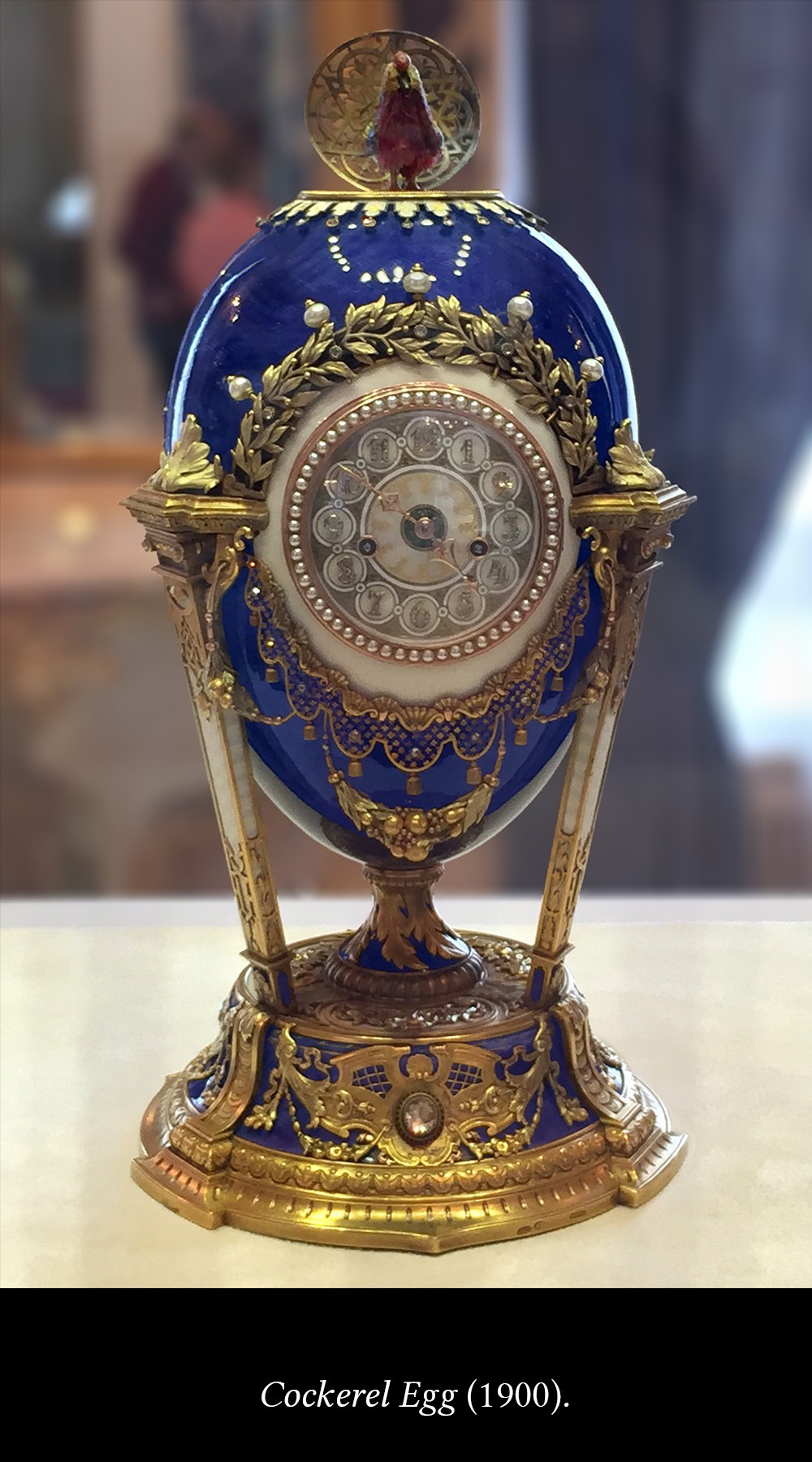
The Tsar Alexander III “discovered” Peter Carl Fabergé, a goldsmith, who turned into the creator of the most famous series of jewelry of the history: Fabergé’s eggs.
These Easter eggs, elevated to the category of works of art, were created between 1885 and 1917. The tradition started with a commission of the Tsar to give them as gift for his wife, María Fiódorovna. And the tradition ended with the Revolution of 1917 that ended with the dynasty of the Tsars.
The eggs (69 in total, 50 of which were Imperial, those of the Imperial family, 8 of which were lost) were made with metals, gems and exquisite and expensive components as we can imagine, and in their interior there were surprises, that are also master pieces of jewelry.
The egg initiating the series was white outside as an ordinary egg, but its yolk was made of gold and had a golden hen which had a pendant with a ruby and a replica of the Imperial Crown in diamonds. María Fiodórovna was so happy with the surprise that Fabergé was named goldsmith of the Imperial crown, and from that moment he was commissioned the creation of new eggs every year, a creative challenge for the artist and his team.
Recommended links:
Artistic Movements, Periods and Styles in 5 Points: Humanism.
The Birth of Venus, Sandro Botticelli.
The Stanze of Raphael and the High Renaissance.
Artistic Movements, Periods and Styles in 5 Points: The Flemish Primitives.
Artistic Movements, Periods and Styles in 5 Points: When does Modern Art Start?
You can also find more material using the search engine.


0 Comments