The versions of The Scream
Stories behind the Works of Art
We could make this publication thanks to small donations. How is 3 minutos de arte supported?
The versions of The Scream by Edvard Munch
The Scream is one of the most famous, most recognizable paintings. It has become a true “cultural icon.” As if that were not enough, it has the importance of being a precursor of Expressionism (one of the most emblematic movements of the 20th century).
The Scream is probably the most perfect example of what an expressionist work is: the artist does not portray the world outside him, he shows his emotions and his inner world through what he paints. The distortion of the figure and the strident coloring are the main tools he uses to “paint” those moods.
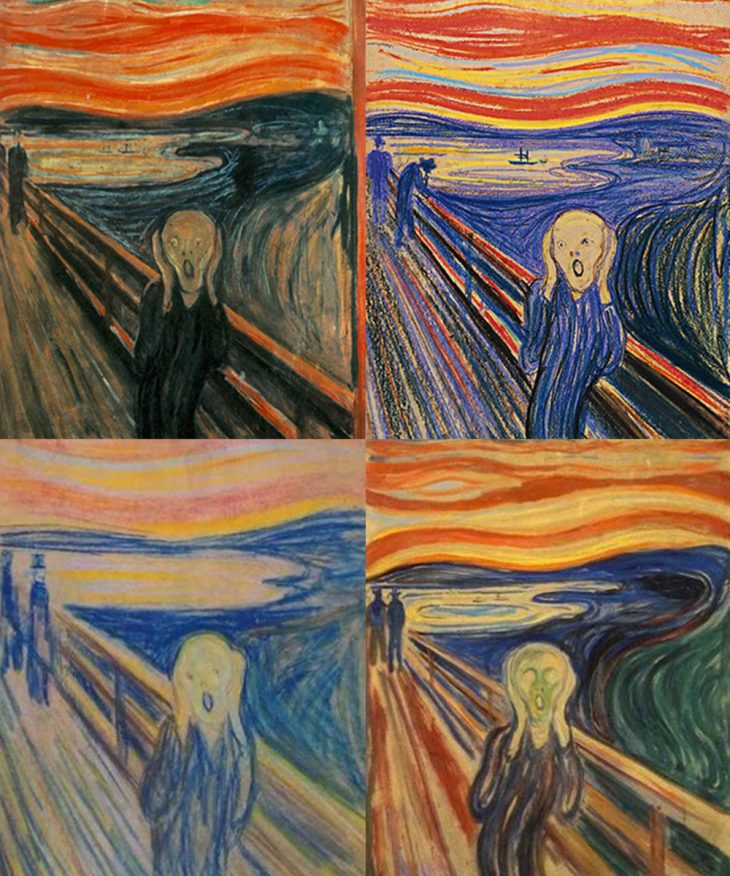
Everyone knows The Scream. However, not everyone knows that there is not just one scream, but several.
Over the years, Munch produced four versions of his work plus a lithograph (an engraved work to make prints).
In the different versions, he uses oil, pastel, tempera, and crayon on cardboard or on wood. The most famous (oil, pastel, and tempera on cardboard) is from 1893 and is in the National Gallery in Oslo. (Of the 4 in the image, it is the one on the top left.)
Why do we automatically think of The Scream when talking about Expressionism? Perhaps because the protagonist’s existential anguish not only reveals the artist’s anguish but “becomes universal” as it turns into a symbol of the modern man’s despair.
Recommended links:
Characteristic Elements of Expressionist Painting.
You can also find more material using the search engine.


0 Comments