



Elements
We could make this publication thanks to small donations. How is 3 minutos de arte supported?
Characteristic Elements of Gothic Painting
The Gothic style predominated in the late Middle Ages, from the 12th century to the Renaissance (in the 15th century Gothic painting coexisted with Renaissance).
Clarification: Although the painting of the Flemish primitives has much of the Gothic style, we prefer to see its characteristics separately.
Almost exclusively religious subject matter.
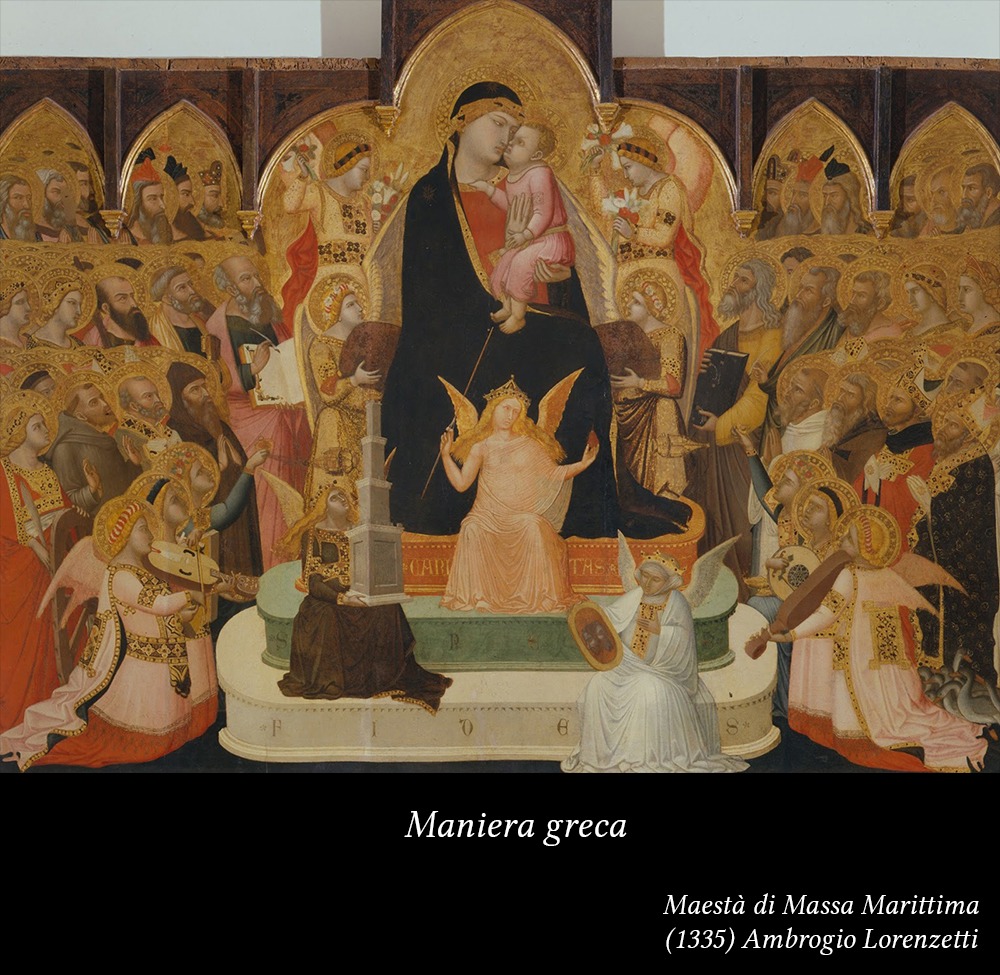
Golden backgrounds.
Preciosity. Exaggerated refinement (characteristic of International Gothic).
Elongated human figure. Looking for elegance, distinction.
Incipient concern for perspective. Attempts are sporadic and generally "failed."
Figures with little volume, flattened.
Symmetry in the composition.
Predominance of hieratism. The solemn gesture, not very expressive, marks a distance between divine and human.
Maniera greca (Greek manner). In fact, it is the set of characteristics already described, which are so called to refer to the inheritance of Byzantine art.
First gestures of "humanization" in the faces of the saints. Some artists began to move apart from hieratism to give feelings and emotions to the faces and make them more "earthly." This was a trend that became more pronounced as the Renaissance approached.
Recommended links:
Artistic Movements from Classical Antiquity to Rococo.
Characteristic Elements of the Painting of the Flemish Primitives.
Characteristic Elements of Renaissance Painting.
Fra Angelico and the Early Renaissance.
You can also find more material using the search engine.


0 Comments