Michelangelo
Stories behind the Works of Art
We could make this publication thanks to small donations. How is 3 minutos de arte supported?
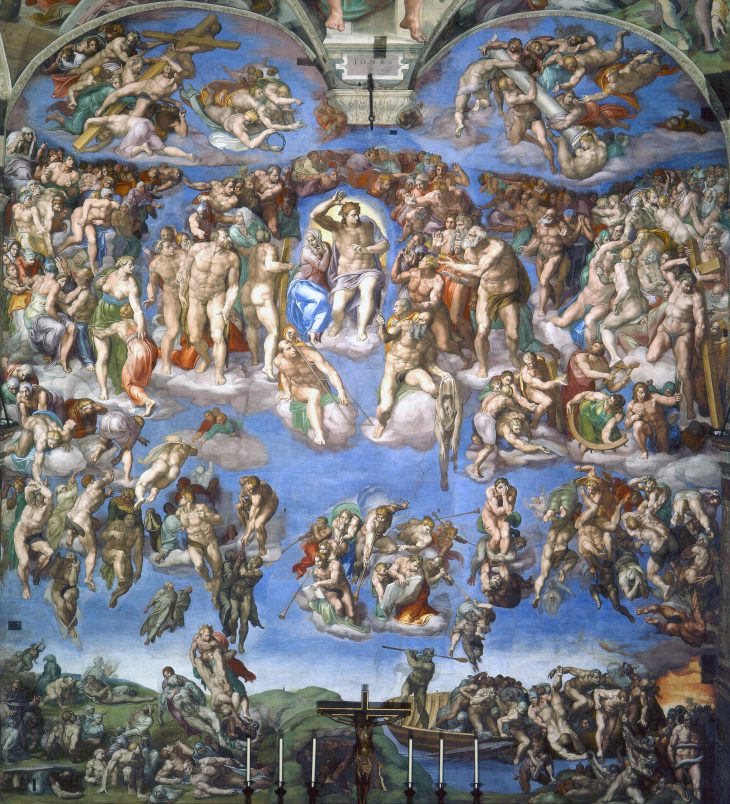
The Last Judgment (1537-1541). Michelangelo
Michelangelo painted The Last Judgment 25 years after the Sistine Chapel ceiling. The anatomy of the figures becomes monumental, excessive, exaggeratedly powerful, reflecting the idea of “divinity,” of the beauty of the human body.
If Renaissance painting is characterized by serenity and the rigorous search for proportions, Michelangelo in this work tends to drama and spectacularity, with those disproportionate bodies and especially forced postures (complicated foreshortenings and serpentine figures, twisted). We may say that it is a mannerist work, with a “theatricality” that anticipates the Baroque (e.g. the gestures of the angry Christ separating the righteous from the sinners).
Michelangelo, the Divine, the genius who did not like to paint and said he was not a painter, worshiped the naked body. However, it was difficult for the Church of the time to accept that.
When the artist had already completed more than three quarters of the work, which took him years, he was visited by Pope Paul III and the Papal Master of Ceremonies, Biagio da Cesena, who was scandalized by the nudes. He expressed that it was not work for the Sistine Chapel but rather for public baths or taverns.
The Pope let Michelangelo continue, but the artist had a complicated personality and Biagio da Cesena had annoyed him, offended him, something he would not overlook.
When he painted the entrance to Hell, Michelangelo painted the judge of Hell Minos with the face of Biagio da Cesena, to which he added donkey ears and a snake curling up his body and biting his genitals.
Feeling humiliated, Biagio desperately asked the Pope to intervene. And the Pope replied with an exquisite sense of humor: “My dear son, had the painter sent you to purgatory, I would have used my best efforts to get you released; but I exercise no influence in Hell.”
More than a decade later, in 1564, the Council of Trent ordered that the nudes be covered with “cloths of purity.” Daniele da Volterra was hired to do the task, and he earned the nickname in the process of “Il Braghettone” (literally, the breeches-maker).
Recommended links:
Michelangelo: “Genius is eternal patience.”
Stories Behind Works of Art: The Birth of Venus, Sandro Botticelli.
The Stanze of Raphael and the High Renaissance.
Fra Angelico and the Early Renaissance.
You can also find more material using the search engine.


0 Comments