John Constable
Fundamental Paintings to Understand the History of Painting
We could make this publication thanks to small donations. How is 3 minutos de arte supported?
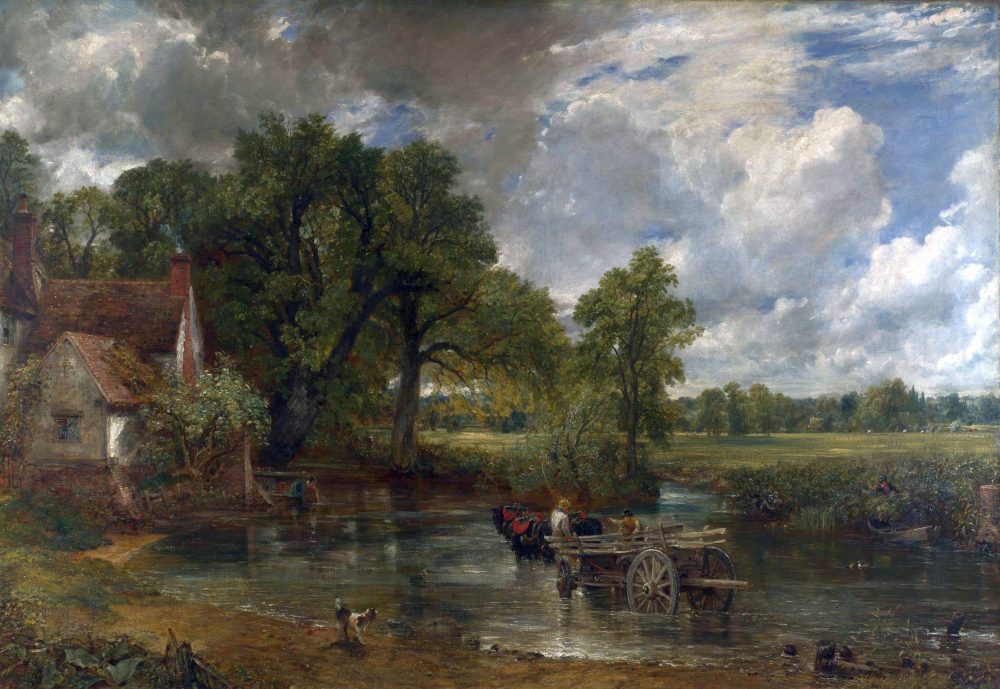
The Hay Wain (1821). John Constable.
Oil on canvas. 1.30 m x 1.85 m
The National Gallery. London
This landscape painting, seemingly harmless in appearance, actually provoked a great upheaval when it was painted. It became decidedly revolutionary.
It was a time in which the history of painting was facing one of its most significant changes: artists began to be more obsessed with truth (the “real” thing) than with beauty.
And Constable was one of those painters who left their studios to seek “direct experience” with nature.
In every detail of this scene, we can see how Constable painted what he saw without affectation, without pride, without pretension. He wanted to capture what his own eyes saw, not what the masters of the past saw through academic recipes, or pre-established techniques and resources.
Constable went out into the field to take notes from life and rework them in his studio. In that way, he captured the true colors, and also the true lights and the true shadows.
Many people were amazed by the brilliance of those “true colors” that Constable captured on canvas, and Delacroix was one of the artists who were fascinated by the brilliance and who were influenced by this work.
John Constable is considered one of the first painters to work outdoors, although he finished painting in his studio. That search for direct experience, that made him make studies and sketches in the field was very important. And that restlessness and way of working proved to be a crucial influence on the important movements that followed: the Barbizon School and Impressionism.
Recommended links:
The direct experience and its importance for modern art.
Timeline: from Neoclassicism till the end of the 19th century.
Characteristic Elements of Romantic Painting.
Turner Seascapes and Romanticism.
Snow Storm – Steam-Boat off a Harbour’s Mouth (1842), Turner.
You can also find more material using the search engine.


0 Comments