Art Deco
Artistic Movements, Periods and Styles in 5 Points
We could make this publication thanks to small donations. How is 3 minutos de arte supported?
Art Deco
- It is a current that took place in painting, but it had more importance in architecture, industrial design, haute couture and graphic design. We may say it was a current of popular design. Contrary to the avant-garde movements in painting with which it coexisted it had no manifestos and did not pretend to “refound art.”
- It encompassed the 20’ and 30’ of the 20th, “the roaring twenties”, when the horrible Great War ended and the economic recovery started. A part of society started to look for enjoyment, pleasures, and evasion as if the world had left sadness behind forever. It is the triumph of hedonism, the search of immediate pleasure and well-being.
- It is not weird then, that the emerging style was a mix of sensuality and luxury combined with the modern design of the triumphant industrial society.
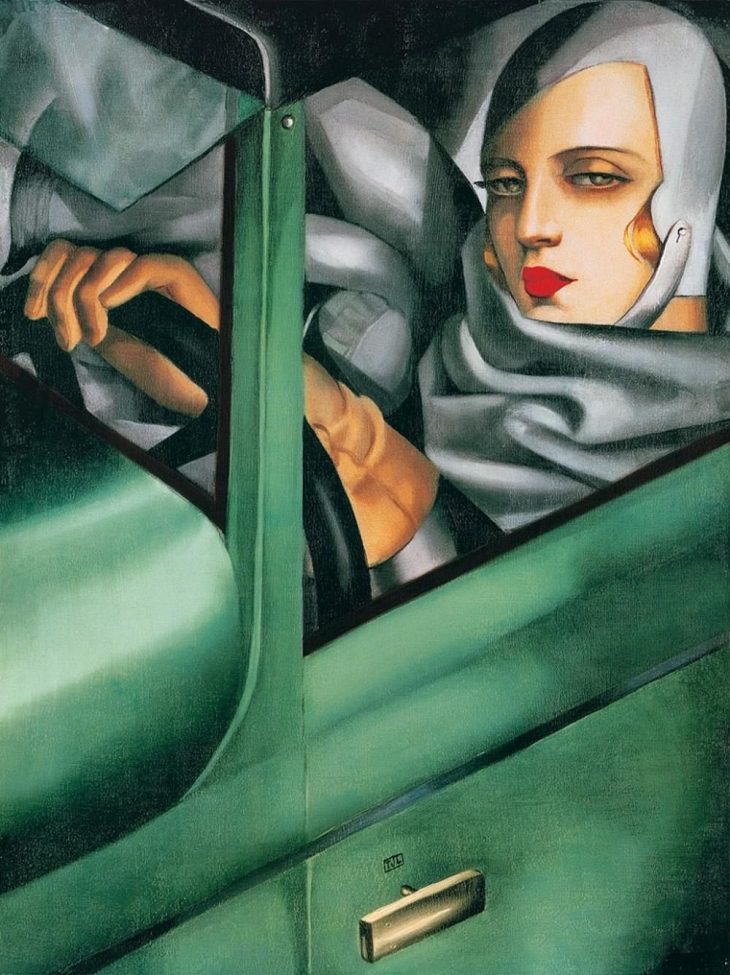
- In the Art déco painting we find geometrization —influence of Cubism— simplification, abstraction and brilliant colors. Human figures are slender, always with an aspect of models portrayed for fashion magazines. And in fact, many paintings were made to illustrate magazine covers, which makes us think about an allegory of the unstoppable, mass consumption proper of that time.
- Modernity did not replace tradition. It coexisted with it, giving design to it and a certain “classical touch” to works.
Representative artists: Tamara de Lempicka, Erté, Dupas, Coles Phillips.
Image: Self-portrait in a Green Bugatti (1929). Tamara de Lempicka.
Recommended links:
Tamara de Lempicka and her Portraits.
The Touch of Tamara de Lempicka.
You can also find more material using the search engine.
Would you like to support 3 minutos de arte?
Our project.


0 Comments